
 | Project Details: Strategies
Overall Impact Metrics
|
Overview
Dartmouth Health (DH), a member of the Healthcare Anchor Network (HAN), is a nonprofit academic health system that serves rural communities in New Hampshire and Vermont through six hospitals, a visiting nurse and hospice program, and numerous clinics. Dartmouth Health is the largest private employer in the state of New Hampshire with just under 14,000 employees.
Like other health systems, recruitment of talent is an ongoing challenge. For Dartmouth Health, that challenge is exacerbated by the region’s low unemployment rates, an aging workforce, and limited access to affordable housing, childcare, and public transportation. These issues are also compounded by a large out-migration of young adults seeking opportunities in more urban settings. In response, DH has built programs to support a sustainable talent pipeline through the following strategies:
- Training interventions & academic partnerships
- Job readiness programs, skill development, and work redesign
- Population engagement
- Addressing workforce barriers, especially housing
Workforce Strategies
Training Interventions
Workforce Readiness Institute (WRI)
In 2014, the health system began taking steps to significantly expand intentional doorways into DH in response to a realization that traditional recruitment strategies weren’t sufficiently filling critical workforce needs for many entry-level positions. With the intention of building in-house training opportunities, DH established a licensed career school, the DH Workforce Readiness Institute (WRI). Individuals trained through the WRI programs earn a training wage, while obtaining the foundational skill set and credential needed to start in a high-demand role in healthcare. There is no cost to the participants for the training and 100% of graduates transition to full- time, benefit-eligible roles in one of the DH member organizations.
In 2019, DH expanded their existing partnership with Colby-Sawyer College in order to provide no-cost college credits to students for the coursework completed in the Medical Assistant, Pharmacy Technician, and Surgical Technology training programs and apprenticeships, which lead to an Associate’s Degree in Health Science.
Jenny Macaulay, Manager of Workforce Strategy at DH shares that “we are not able to recruit enough talent in the market that have the skill set and credentials required for critical healthcare roles. This being the case—we have to create a market; we have to build it.
Building talent and engaging people has become a cornerstone to our work.”
Programming offered through the WRI has been developed around four pillars:
- SPARK an interest in healthcare careers
- Teach the SKILLS needed to be successful
- SUPPORT participants while they learn and grow
- With the hope that they STAY with the organization, industry and region
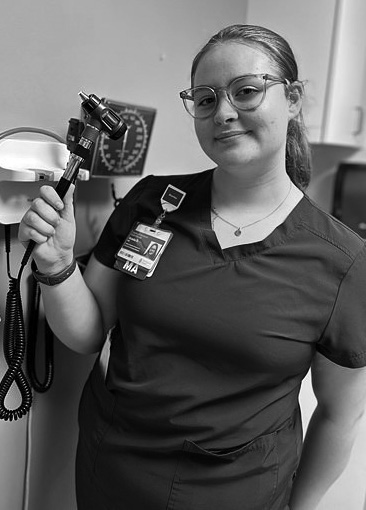
The first apprenticeship programs developed and offered through the WRI were for medical assistants and pharmacy technicians. Following early success with these programs, DH decided to expand their apprenticeship offerings to include certified surgical technologists. As of 2023, six paid training programs are offered through the WRI, including three U.S. Department of Labor Registered Apprenticeships (medical assistant, pharmacy technician, and surgical technologist), which include a pathway to an Associate’s Degree in Health Science at Colby-Sawyer College, and three paid training programs for licensed nurse assistants, phlebotomists, and ophthalmic assistants. To date, over 1,300 individuals have participated in the training programs.
Academic Partnerships
DH has developed partnerships with regional academic institutions to create intentional pathways into the health system from local schools. Universities, community colleges, and technical schools are critical partners in developing and educating the healthcare workforce. As an academic health system, the goal is to support as many learning opportunities as possible and annually DH hosts over 500 nursing and 200 allied health college students completing their clinical trainings and rotations. These clinical training and rotational opportunities provide valuable learning experiences to students where they are able to make connections with the DH teams and leaders and upon graduation (or before) make the decision to join their workforce.
In 2019, DH was awarded a $2.5 million grant from the Department of Labor to support workforce development in rural areas. A key element of the grant strategy is to provide scholarships to current healthcare employees who are continuing their education at partner academic institutions towards a higher-level healthcare credential. In total, $1 million of this grant funding was allocated for scholarships and to date, support has been provided to over 180 individuals. Programs like this help employees continue their education and advance their career and earning potential without incurring significant debt. These scholarship dollars are additive to funding available through DH’s existing tuition reimbursement program.
Job Readiness Programs and Skill Development
In order to attract and retain a qualified, diverse, and engaged workforce, DH has developed programming to recruit and support individuals who are eager to work but lack the minimum qualifications, skills or knowledge required for specific roles. Work readiness and skill-building programs have been implemented to address skill gaps and enhance individuals’ preparedness for the DH workforce. For example, if an interested candidate lacks a high school diploma or GED, they can participate in a job readiness program and receive support to obtain their GED while working and earning a salary. From there, they are eligible to continue their training and education through WRI apprenticeship or training programs. If a candidate needs language assistance, the readiness program can help with access to English for Speakers of Other Languages (ESOL) classes. If scheduling is an issue, specialists on the Workforce Development team can help the individual create a flexible schedule that balances their career and education goals.
Additionally, DH has implemented a career counseling program that helps people understand the many ways to start or advance their healthcare career.
Population Engagement
Youth Engagement
To support the long-term investment in the regional healthcare workforce, DH expanded its workforce development portfolio from paid training programs designed to engage the current workforce, to regional youth with a focus on the future workforce. In 2017, DH began partnering with local high schools to support career exploration in the healthcare field and to promote DH’s training programs as post- secondary options upon graduation.
Macaulay describes how many youth are not aware of the full diversity of opportunities that are available to them within the healthcare industry. In 2018, DH launched summer internship programs for students in college and high school. The internship programs combine paid work, professional skill development, mentoring, and experiential learning, creating a robust summer experience. It is DH’s goal to spark a lasting interest in the many career pathways available in the healthcare industry while offering the opportunity to practice important workplace skills and support informed post-secondary planning.
Dartmouth Health’s youth engagement programs also include paid internship and flexible work programs, paid pre-apprenticeships and co-ops, research projects, and for-credit student experiences.1 Macaulay says, “This is a workforce development strategy, but it is also a population health strategy. The team designed these opportunities to prepare young people to be successful contributors in the workforce, whether in healthcare or other industries, as this investment in our regional youth is also an investment in their personal success and the drivers/social determinants of health.”
In addition to its youth engagement strategy, DH is also working to understand and remove barriers for other populations that are under-represented in the healthcare workforce including immigrants, people changing careers or returning to the workforce, and veterans.
Addressing Workforce Barriers
Addressing the Housing Shortage
The availability and affordability of workforce housing is a significant barrier in the communities that Dartmouth Health operates in. It is estimated that an additional 10,000 housing units are needed in the greater Upper Valley region to meet demand. Limited inventory has also driven the cost of available housing to an unaffordable price point. As DH operates in a rural setting with a limited local talent pool to recruit from, it is reliant on people being able to relocate to the area in order to join its workforce. In 2020, there was a significant increase in the number of candidates that withdrew their acceptance of a job offer after trying to secure housing in proximity to their future workplace.
In response to the housing crisis, DH has developed a workforce housing program that provides access to workforce housing units, income-based subsidies, and relocation resources. Currently, this program is available to new hires who are relocating in order to start a position at DH. With direct support from the executive leadership team, DH has master leased 150 apartments in close proximity to its hospitals that are subleased to new hires who will provide or support direct patient care, are relocating from more than 50 miles away and need to work onsite (vs remote). A rental network and website has also been established where local landlords can post available units/ homes for rent. DH hired a full-time Housing Program Manager to support these efforts and work directly with new hires relocating to the area. To date in 2023, over 600 individuals were assisted with housing and relocation.
On a more macro level, Dartmouth Health is collaborating with seven other local employers including Dartmouth College, to develop and invest in the Upper Valley Loan Fund to increase the supply of affordable housing in the region. Led by Evernorth, a regional housing finance partner specializing in low-income housing investments, this collective effort will contribute to the development of approximately 250 units of affordable housing, most of which will rent for 80% of Area Median Income. Together, the Loan Fund partners have invested $9 million, each agreeing to a 1.5% rate of return on capital with a maturity of 15 years.
Jenny Macaulay, Manager of Workforce Strategy at DH shares that “we are not able to recruit enough talent in the market that have the skill set and credentials required for critical healthcare roles. This being the case—we have to create a market; we have to build it. Building talent and engaging people has become a cornerstone to our work.”
The Loan Fund aims to address the persistent shortage of affordable housing, particularly affecting individuals with low- to moderate-wage earnings and eligibility will not be restricted to employees of the seven employer investors. DH played a significant role in introducing the fund concept to the other co- investors and made a $3 million place-based investment in the Fund. Gregory Norman, Senior Director of Community Health, notes “DH was inspired by innovative investment models in other regions and the place-based investing work of healthcare anchor institutions. DH and its collaborating partners adapted this model to address challenges of our rural setting and promote collaboration among diverse local anchor institutions and socially conscious employers”.2
Addressing Childcare and Transportation Barriers
Dartmouth Health continues to partner with community-based organizations to address childcare and transportation barriers. In the region, it is estimated that there is demand for over 2,500 additional childcare spots and that there are currently 800 spots in existing centers that are closed due to staffing. Dartmouth Health is partnering closely with the Early Care & Education Association to support and provide funding for initiatives that recruit and train the Early Childhood Educator workforce, support expansion of the Home Provider Network, and stabilize existing centers. Separately, DH is evaluating how it might expand capacity at the childcare centers it operates at some system member locations.
Transportation in a rural geography poses a significant challenge especially as many employees have a 30 to 60-minute commute to work. This is compounded by winter weather and the need to operate 24 hours per day, 365 days per year. For many years, DH has been a financial supporter of the free local bus service, and has subsidized regional bus services in the towns near its academic medical center. In 2023, DH and other local employers worked with the local bus service provider to expand its routes to include evening and weekend service, making it more possible for people to consistently rely on free public transportation. DH has also been an advocate for and supporter of commuter bus services to and from communities where a number of employees live.
Program Structure
DH’s workforce development programs were staffed by two individuals in 2014. Since then, staffing capacity has expanded to include 25 FTEs that support workforce development programs across the health system. The leadership team consists of a director of workforce development and planning and 2 workforce strategy managers. The team is made up of 2 workforce consultants, 7 workforce development specialists, 3 workforce development coordinators, 6 workforce development educators, and 2 grant program managers. Additional programming and support is provided by a housing program manager and administrative assistant. The workforce development department works in close collaboration with talent acquisition.
Program Impact
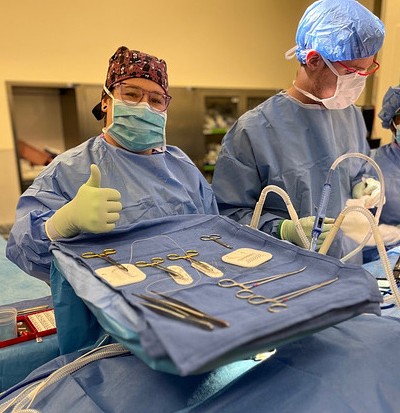 DH’s Workforce Readiness Institute (WRI) has a completion rate of 95% or greater for each of the training programs. To date, the WRI has successfully trained over 1,300 individuals who have entered or advanced within the health system’s workforce. In 2023, 195 individuals were trained, obtained a high- demand credential, and directly entered the Dartmouth Health workforce or advanced their careers. Moreover, training and apprenticeship programs provide a significant return on investment and for some roles, are the singular talent pipeline into these high-need, credentialed roles. In 2016, DH partnered with the U.S. Department of Commerce to measure the return on investment related to medical assistant apprenticeship programs and found reduced overtime expenses, reduced physician turnover, and decreased prescription refill response time. The study pointed to an almost 40% rate of return on investment compared to the cost of doing nothing.
The youth engagement programing has achieved success in both the short and long term. In the short term, it exposes young people to healthcare career opportunities and encourages them to participate in the WRI early in their career pathways. In the long term, the program’s success is evident as youth participants become brand ambassadors, sharing their valuable experiences with their communities.
Lessons Learned
Hire directly into the training program and have people understand the organization’s investment in their training and development.
In the first few years, trainees participating in DH’s programs were not hired until the end of their training and ready to start their apprenticeship. Trainees were viewed as students versus employees with the ability to develop skills on the job. This created an identity barrier, which led to the training program participants feeling isolated and like they did not belong. This also caused financial hardship for participants. The workforce development team pivoted to a training model that enabled trainees to be hired at the start of their program and paid a training wage. This made it financially possible for more people to pursue the training and also supported organizational onboarding, orientation, and enculturation during their program.
Get permission from leadership to “try and fail”
The scope of DH’s workforce development strategies grew gradually and was pioneered by a small, yet entrepreneurial, group of individuals interested in trying out new solutions to address critical workforce shortages. This small group got permission from leadership to explore non-traditional and creative solutions to workforce shortages. “You always need to be evolving to try to stay current with what the talent market is doing,” Macaulay explained. The support of the DH leadership facilitated the ability to discover what strategies worked. Grant funding was one way that DH was able to fund these programs and demonstrate their value to stakeholders, which led to operational funding, including for expanding staff capacity as noted previously.
DH was inspired by innovative investment models in other regions and the place-based investing work of healthcare anchor institutions. DH and its collaborating partners adapted this model to address challenges of our rural setting and promote collaboration among diverse local anchor institutions and socially conscious employers.
— Gregory Norman, Senior Director of Community Health
With its demonstrated success, the team continued to grow and expanded its programming in other different operational departments with the new-found knowledge of how to implement impactful programs.
Fill positions quickly with rolling recruitment and guaranteed hires
Originally, the recruitment campaign for the training programs focused on a cohort-by-cohort model. A consequence of this model was if a candidate missed the application deadline they often would have found employment elsewhere by the time the next cohort recruitment cycle started again. To ensure that good candidates were not lost, a “rolling recruitment” strategy was implemented. This consists of bringing candidates into non-credentialed roles as they wait for their next program to start. This helps onboarding and productivity and can make it slightly quicker to complete the apprenticeship component of some programs while providing an opportunity for work while awaiting training.
You can address issues on the macro and individual levels concurrently
One of the keys to the success of the DH workforce development strategy is the realization that barriers to workforce development require a multi-faceted approach that operates on both the macro and micro levels concurrently. At the macro level, healthcare systems can implement strategic workforce planning initiatives and work with policymakers and other champions in multiple sectors outside of healthcare. At the micro level, healthcare systems can provide ongoing professional development opportunities, social and financial assistance, and coaching to enhance employees’ skills and promote career growth. DH addressed the root causes of workforce barriers through policy advocacy (macro) instead of viewing them as beyond the scope of the strategy. DH actively engages on the issues of the affordable housing shortage, childcare needs, and transportation crisis. DH also directs investment funds towards alleviating these systemic challenges.
1 Dartmouth-Hitchcock Workforce Readiness Institute. (n.d.). Internship Programs.
https://dhwri.org/internship-programs/
2 Healthcare Anchor Network. (2022, June). Addressing Housing Shortage through Investing.
https://healthcareanchor.network/2022/06/addressing-housing-shortage-through-investing/
3 U.S. Department of Commerce. (2016, November). Benefits and Costs of Apprenticeships: A Business Perspective.
- Carolyn Isabelle, Jenny Macaulay interview by Ndeye Boury Silla, Lauren Worth, and Debbi Perkul, Healthcare Anchor Network, 05/09/2023.