
 | Key Strategies
Impact
|
Overview & Background
Based in Baton Rouge, Louisiana, Franciscan Missionaries of Our Lady Health System (FMOLHS) is a Catholic ministry- based health system with eight hospitals serving communities in Louisiana and Mississippi. FMOLHS adopted an Economic Justice for All framework in 2018 to ensure that institutional decision- making aligns with its mission as an organization. This framework centers the understanding that “economic decisions have human consequences and moral content,” according to Coletta Barrett, vice president of mission at Our Lady of the Lake (OLOL) Regional Medical Center, the flagship hospital of FMOLHS. As an extension of this philosophy, OLOL partnered with Catholic Charities of the Diocese of Baton Rouge in October 2018 to launch a micro-loan investment fund called The Faith Fund to address a key driver of health: financial stability.
This framework centers the understanding that economic decisions have human consequences and moral content.
— Coletta Barrett, Vice President of Mission,
Our Lady of the Lake (OLOL) Regional Medical Center
Prior to the launch of this program, OLOL had operated an emergency financial assistance program called the Team Member Assistance Fund, through which employees experiencing a significant event could apply for emergency funds to cover basic expenses such as rent, utilities, and car payments. In order to receive funds, employees were required to complete a financial assessment. Through these assessments, OLOL found that many employees who utilized the assistance fund were also using payday loans—loans taken out of the borrowers’ next paycheck which are accompanied by excessive interest rates ranging from 300 – 1000%. Three out of ten employees who used financial assistance funds “were trapped in payday lending hell,” says Barrett, and caught in a long-term cycle of debt. In order to cover basic living expenses like food, rent, and utilities, people would take out small loans of about $300 from payday lenders while paying a $50 fee, often with a 100% interest rate, to access the funds.
All photos provided by The Faith Fund
OLOL turned to a policy advocacy organization called the Louisiana Budget Project to understand the data on payday lending in the state. They found that the average borrower takes out nine loans per year, with a typical loan of $350. More than 900 payday lenders are operating statewide, with a high concentration in low-income communities and communities of color. These lenders outnumber McDonald’s restaurants four-to-one.
In 2015, OLOL joined a coalition with the Louisiana Budget Project, Catholic Charities of the Diocese of Baton Rouge, and other community-based organizations to advocate for a policy solution to predatory payday lending, including a prohibition on interest rates above 36%. Barrett described how the legislators they spoke with argued that people need payday loans because they are often the only option available for accessing money, and in a competitive market, lenders shouldn’t be regulated. Faced with legislators’ insistence that “there are no alternatives,” OLOL “took that as a challenge and worked on an alternative,” says Barrett.
While FMOLHS is committed to paying fair and just wages, and has a timeline for moving employees up to a minimum of $15 an hour, the health system recognizes that many employees have reported experiences with financial instability and indicated their need for financial assistance funds and other forms of support.
Next, OLOL established an internal workgroup to formulate an alternative to predatory lending for its employees. Could the hospital take some of its emergency assistance dollars and invest them in a fund that provides financial assistance on the front end before any emergencies occur? The workgroup landed on a solution: a micro-lending program that could help employees escape what Barrett describes as the “vicious cycle” of predatory lending—and hopefully prevent additional people from ever entering the cycle.
Program Design
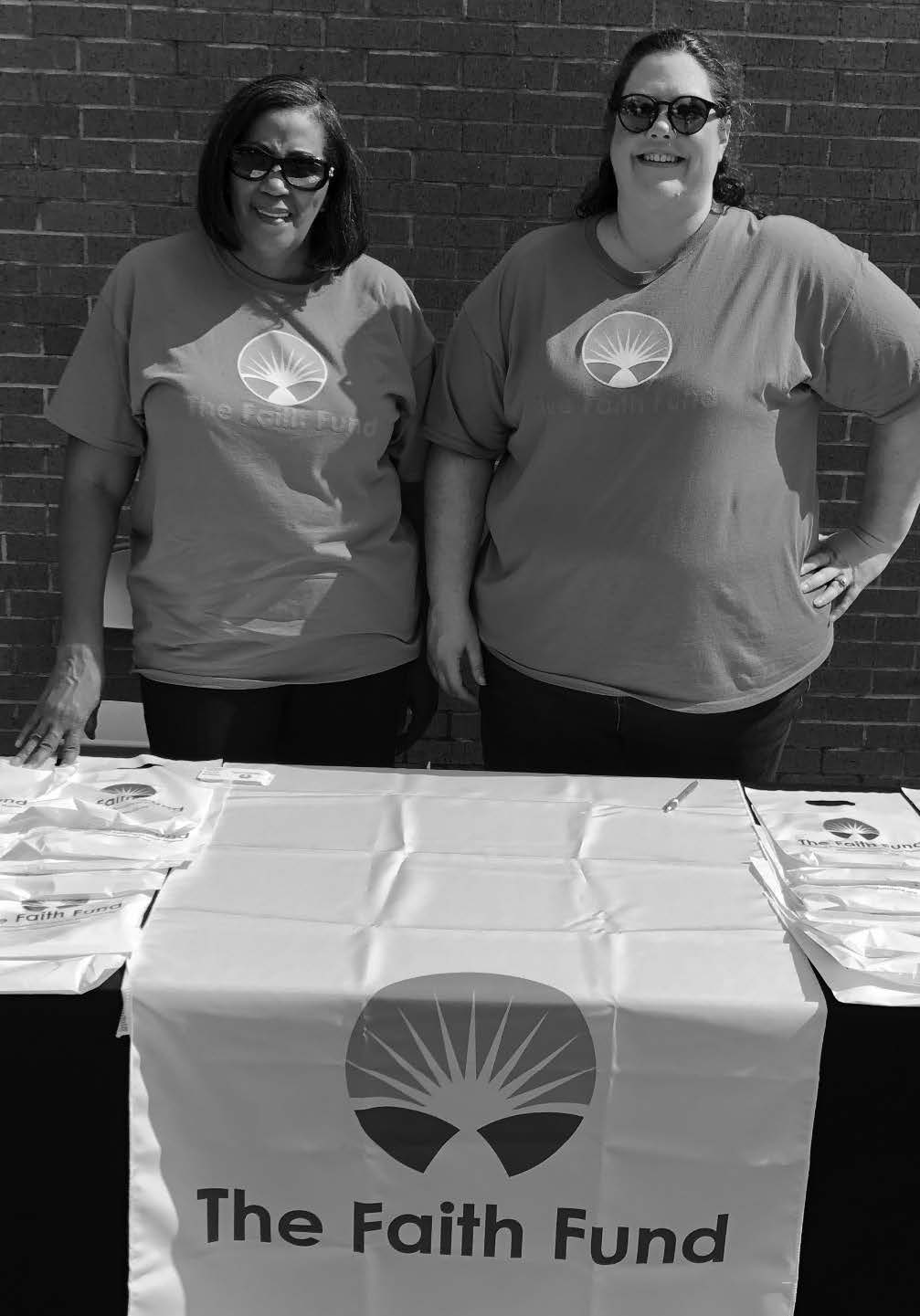
The Faith Fund was established at OLOL in 2018 as a not-for-profit partnership with the Catholic Charities of the Diocese of Baton Rouge, Our Lady of the Lake, and MetroMorphosis, a local community non-profit. The Faith Fund utilizes a holistic approach that combines material financial assistance for employees in the form of lower interest (~5.96%) loans with free financial coaching to create a debt recovery plan and build financial stability.
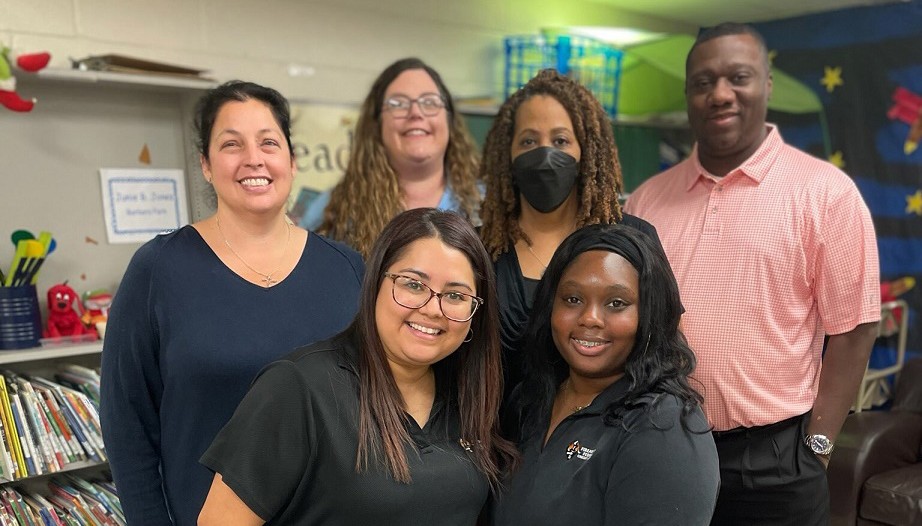
Employees who have been a member of the FMOLHS workforce for at least one year are eligible to apply for loans. These loans are complemented by financial education and counseling from a third-party partnering community development financing institution, the New Orleans Firemen’s Federal Credit Union (NOFFCU). Financial counselors meet with employees in person and on site to provide confidential coaching and to help loan recipients develop a budget and sustainability plan. “This education is paramount,” Barrett says, as it helps participants understand their options and build confidence around responding to financial stresses. While some applications for loans are denied, anyone who applies for a loan can access and receive one-on-one financial coaching.
Every 12 to 24 months, The Faith Fund engages in planning sessions led by the fund’s Board of Directors, half of whom must be The Faith Fund clientele—employees who’ve utilized the Fund’s services—or represent an underserved population of the community. This has enabled the fund to be responsive to needs as they arise. The crises wrought by the COVID-19 pandemic in 2020 and Hurricane Ida in 2021 required FMOLHS to identify community needs and quickly pivot to create products to address employees’ financial insecurity.
The Faith Fund
In 2020, when the pandemic and resulting financial strains forced FMOLHS to furlough some of its employees and reduce working hours for others, mission leaders from each region of the system advocated for an expansion of The Faith Fund so employees across FMOLHS could access its financial aid resources. Mission leaders acted as “internal champions” by sharing stories at leadership meetings of employees gaining financial security. Once The Faith Fund was expanded across the system, mission leaders encouraged local leadership to connect employees in need with the fund’s financial counselors and promoted messages about financial aid resources through internal communications.
In addition to expanding the reach of The Faith Fund, FMOLHS established the COVID-19 Faith Fund Emergency Income Stabilization Loan Program in 2020. This initiative enabled employees to borrow up to $3,000 at a 6% interest rate and pay it back over a two-year period, offering some financial cushion and stability to those who were hit hard financially by the pandemic.
In late 2020, FMOLHS learned that some employees who were utilizing The Faith Fund’s services were still turning to payday loans between biweekly pay periods. In response, mission leaders partnered with human resources to introduce the PayActiv program, which enables employees to access their pay immediately after earning it, instead of having to wait until the end of their pay period. “[Our vision is] that we have a continuum of financial resources for our team members,” Barrett stated. “PayActiv is the prevention strategy and The Faith Fund is the recovery strategy.”
Community Banking Solutions
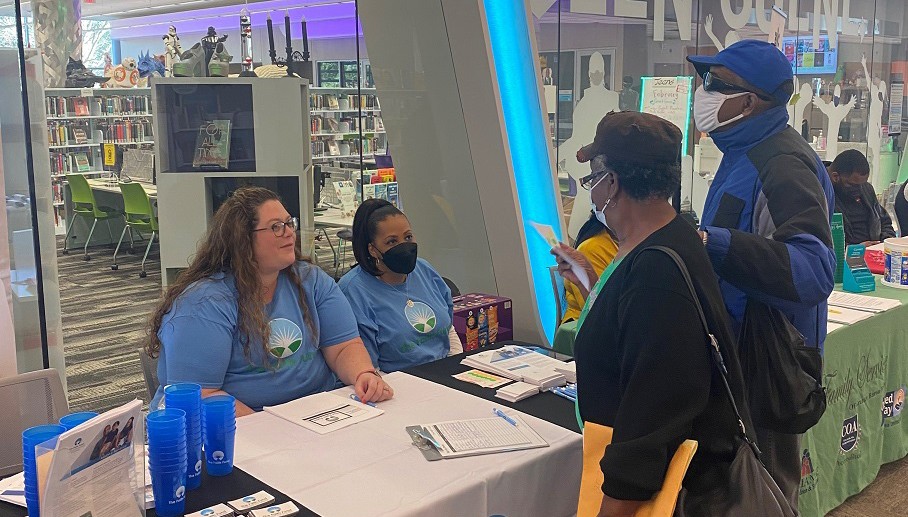
While the health system was advancing strategies to help its workforce overcome financial instability during the pandemic, many low-income communities in their service area in Baton Rouge were experiencing business closures, including many traditional banks, leaving “banking deserts” in their wake. This meant community residents had limited access to financial services such as cashing checks and obtaining loans. FMOLHS responded by expanding its partnership with the Catholic Charities of the Diocese of Baton Rouge and the New Orleans Firemen’s Federal Credit Union to establish a brick-and-mortar storefront for The Faith Fund in North Baton Rouge that is open to the community at large—not just FMOLHS employees.
“It was important if we were going to have a physical presence that we are embedded in a community with a high Community Needs Index rating,” explained Barrett. The Faith Fund storefront is situated in an area of North Baton Rouge with more payday lending storefronts than Wendy’s, McDonald’s, and Burger Kings combined. It fills a gap for North Baton Rouge residents by providing an alternative to payday lending, as well as financial coaching in individual and group settings. Barrett reports that financial coaching has helped clients to improve their credit scores, making homeownership a possibility for many. A vital goal of the storefront is to help community members fill in knowledge gaps around personal financial management to overcome economic insecurity and ultimately break patterns of intergenerational poverty.
Program Impact
To assess impact, FMOLHS tracks the total dollar amount of loans borrowed through The Faith Fund, the amount paid, and the number of fees and interest payments avoided by employees. These metrics are measured in addition to tracking the usage of financial products by employees who reside in the zip codes of focus.
Approximately three months after establishing The Faith Fund, FMOLHS’ workforce members had avoided $263,953 worth of fees and interest payments. As of January 2023, the delinquency rate for borrowers sits between 2.8% and 6.3%, below the industry standard of 10%, which Barrett describes as “very good, solid numbers.” Since 2018, there have been 1,742 loans provided, $6,403,880 borrowed, and $18,273,991 of total impact. Over 1,600 team members have attended financial education sessions or received support from financial counselors. A total of 1,654 employees have been served by The Faith Fund as of January 2023, approximately 95% of the 1,742 total members.
Many low-income communities in their service area in Baton Rouge were experiencing business closures, including many traditional banks, leaving “banking deserts” in their wake. This meant community residents had limited access to financial services such as cashing checks and obtaining loans. FMOLHS responded by expanding its partnership with the Catholic Charities of the Diocese of Baton Rouge and the New Orleans Firemen’s Federal Credit Union to establish a brick-and-mortar storefront for The Faith Fund in North Baton Rouge that is open to the community at large—not just FMOLHS employees.
The Faith Fund
PayActiv data shows that more than 899 employees have accessed advance funds from their paychecks since the program’s inception. The average amount accessed is $100. The total amount withdrawn early from wages is over $2.8 million. Nearly 47% of those accessing funds fall into the hourly income group making less than $16/hr. These employees represent diverse job roles, including Certified Nursing Assistants, Registered Nurses, and Pharmacy Technicians.
“You may be surprised at the number of your team members that fall to these predatory lenders and find themselves in these financial traps,” says Barrett.
“When we help someone [get] out of payday lending, we have a return on that [investment] of almost three to one,” Barrett shared. “When they get out of having to pay these exorbitant interest rates, it allows them [to save] so much money.”
In addition, Barrett shared that investing in employees’ financial health can lead to intangible benefits. “When someone feels as though their organization genuinely cares about them—not just the work that they’re doing, but their overall financial health, their credit, and those types of things—that has a way of building a certain level of loyalty that even a pay increase may not be able to buy. It feels as though you’re working for [people] who genuinely care about you.”
Impact Story
A Faith Fund board member shared the following story in a 2022 board meeting:
“A Faith Fund member reached out to us after Hurricane Ida. She had extensive damage to her home from a tree falling on it. She qualified for our Emergency Loan, but those funds were only enough to pay for the tree removal. After about a month or so, she reached back out to me. Her insurance deductible was $4,500. She said that they had a little bit of savings and that she did receive some help from FEMA, but they were still going to be short approximately $2500. She said she wanted to see if there was anything else we could do before she tried to withdraw from her 401k. We decided to put in a personal loan for the $2500 and have her husband be a co-borrower. The application was indeed approved! But that is not all.
Through the process, we reviewed both credit bureaus with the couple. We mentioned to the wife that even though they had some struggles in the beginning of COVID, her credit score had gone up 60 points since then. The husband was so impressed that he began to ask questions about his score. He was laid off in the beginning of the pandemic which caused them some financial struggles. We reviewed his credit report and recommended that he needed some form of revolving debt in his credit portfolio. We got him approved for a $1000 credit limit with an APR of 12.9%. He was very impressed with our program. He wants to have follow-up sessions every three months, and he wants us to continue to help them with their budget and savings.”
When someone feels as though their organization genuinely cares about them— not just the work that they’re doing, but their overall financial health, their credit, and those types of things—that has a way of building a certain level of loyalty that even a pay increase may not be able to buy. It feels as though you’re working for [people] who genuinely care about you.
Funding
Use of unspent FSA funds to create a financial assistance fund
The Faith Fund’s sustainability to date can be attributed partly to the resourceful usage of a sustainable funding source: unspent funds from employees’ Flexible Medical and Dependent Care Accounts. Barrett recalls “lamenting about how to raise money for the [Team Member Assistance Fund]” before finding out that OLOL had access to about $30,000 in unused Flexible Spending Account (FSA) funds annually that were getting added back to organizational line items. These funds are generated through employee deductions for health savings accounts and dependent care. Because some of the dollars are “use it or lose it,” any funds not used by the employees that year become available to the employer. The president and CEO of OLOL in 2006 agreed to deposit these unspent funds annually into the Team Member Assistance fund.
To establish The Faith Fund, OLOL leveraged an initial grant of $50,000 from its existing Team Member Assistance Fund account. As a sustainability measure, OLOL pledged to reseed the FMOLHS Faith Fund account when the savings account balance fell to less than $35,000. The FMOLHS Faith Fund account secures employees’ loans. When employees default on loans, FMOLHS commits to replenishing the funds. The first re-basing fee was required in April 2021—two and a half years after The Faith Fund was established. To date, FMOLHS has contributed $158,468 to offset the defaults of team members.
NOFFCU covers 40% of the write-offs, and FMOLHS covers 60%.
The Faith Fund storefront and services made available to community residents are funded by an unrestricted, three-year $50,000 annual grant from the FMOL Sisters’ congregation.
Staffing, Partnerships & Resources
The Faith Fund was launched in 2018 in partnership with the Catholic Charities of the Diocese of Baton Rouge, local nonprofit MetroMorphosis (which works to transform urban communities), the New Orleans Firemen’s Federal Credit Union (NOFFCU), and OLOL. The Faith Fund later achieved 501(c)(3) nonprofit status before opening its storefront location in 2021. The Faith Fund community storefront is operated by NOFFCU.
Catholic Charities put out a request for proposals for a financial institution partner in implementing The Faith Fund and selected NOFFCU, a local community development financial institution (CDFI). CDFIs are mission-driven financial institutions that provide services in financially underserved communities. The Credit Union offers financial counselors to staff the educational services.
The Faith Fund’s executive director is responsible for managing the Fund, with oversight from the Board of Directors, which includes representatives from FMOLHS, Catholic Charities of the Diocese of Baton Rouge, MetroMorphosis, and a community advisory team made up of community stakeholders. FMOLHS conducts outreach to identify individuals for the community advisory team who are willing to attend four to six meetings over the course of a two-year term. Community advisory team members are assigned a task or area of The Faith Fund strategy to focus on and share recommendations for improvement.
Lessons Learned and Takeaways
Offer a continuum of services to help employees overcome financial instability and achieve long-term financial stability
As a faith-based organization and an anchor institution, FMOLHS’s economic security strategy is one example of how the health system can “[achieve] our mission for our team members as well as for the community that we serve.” The continuum of services offered ranges from small funds available to employees through their earned wages (with PayActiv), to microloans through The Faith Fund, to larger income stabilization loans—with financial education and counseling available to people across the income spectrum.
Be flexible and responsive to emerging needs
Over time, FMOLHS evolved its economic security strategy to fill gaps and needs as they emerged. While The Faith Fund provided support for employees experiencing debt and financial hardship, the addition of PayActiv to the suite of financial aid resources filled a gap in the prevention strategy by making it easier for employees to access earned wages, typically smaller amounts than the loans from The Faith Fund. Similarly, the COVID-19 Faith Fund Emergency Income Stabilization Loan Program and the Hurricane Ida relief loan offered relief to employees facing added financial strain during the pandemic and hurricane.
Top 10 Positions Enrolled in PayActiv, 2021
| Jun-21 | Jul-21 | Aug-21 | Sep-21 | Oct-21 |
| Certified Nursing Assistant | Certified Nursing Assistant | Certified Nursing Assistant | Certified Nursing Assistant | Certified Nursing Assistant |
| Patient Access Representative 1- Hospital | Patient Access Representative 1- Hospital | Patient Access Representative 1- Hospital | Medical Assistant 1 | Medical Assistant 1 |
| Medical Assistant 1 | Patient Access Representative 1- Hospital | Patient Access Representative 1- Hospital | Patient Access Representative 1- Hospital | Patient Access Representative 1- Hospital |
| Clinical Services Representative 1 | Medical Assistant 1 | Medical Assistant 1 | Patient Access Representative 1- Hospital | Clinical Services Representative 1 |
| Patient Access Representative 1 - Clinic | Clinical Services Representative 1 | Clinical Services Representative 1 | Clinical Services Representative 1 | Patient Access Representative 1 - Clinic |
| Patient Access Representative 2 - Clinic | Licensed Practical Nurse 1 - Clinic | Registered Nurse 2 | Nursing Assistant | Nursing Assistant |
| Nursing Assistant | Licensed Practical Nurse | Licensed Practical Nurse 1- Clinic | Registered Nurse 2 | Registered Nurse 2 |
| Pharmacy Technician 1 | Nursing Assistant | Nursing Assistant | Licensed Practical Nurse 1 - Clinic | Patient Access Representative 2 - Clinic |
| Licensed Practical Nurse | Patient Access Representative 2 - Clinic | Patient Access Representative 2 - Clinic | Patient Access Representative 2 - Clinic | Licensed Practical Nurse 1 - Clinic |
| Licensed Practical Nurse 1 - Clinic | Registered Nurse 2 | Licensed Practical Nurse | Licensed Practical Nurse | Security Guard 1 |
- 1 For more information about payday lending in Louisiana, visit the Louisiana Budget Project’s website here: https://www.labudget.org/paydaylending/.
- 2 Drew Dahl and Michelle Franke, “Banking Deserts Become a Concern as Branches Dry Up,” Federal Reserve Bank of St. Louis, accessed January 17, 2023, https://www.stlouisfed.org/publications/regional- economist/second-quarter-2017/banking-deserts-become-a-concern-as-branches-dry-up
- Coletta Barrett and Emily Stevens, “Financial Programs For Our Workers: The Ultimate Return on Investment,” Health Progress, Summer 2021, Vol. 102, No. 3.
- Coletta Barrett, e-mail message to Mia Williams and Lauren Worth, October 21, 202
- Coletta Barrett, e-mail message to Mia Williams and Lauren Worth, January 20, 2022.
- Coletta Barrett, e-mail message to Mia Williams and Lauren Worth, July 11, 2022.
- Coletta Barrett, “Financial Programs for Our Team Members: The Faith Fund,” Healthcare Anchor Network, September 9, 2021.
- Coletta Barrett, interview by Lauren Worth, August 29, 2022.
- Faith Fund Meeting Minutes, The Faith Fund, shared by Coletta Barrett, January 25, 2022.
- “Quick Facts About Payday Lending,” Louisiana Budget Project, accessed January 17, 2023, http://www.labudget.org/paydaylendingquickfacts/.